I Want an Ethical Ring but Also Want Sparkle—What Are My Options?
You can care about where a ring comes from and still want it to catch the light from across the room. Those wishes aren’t in conflict. The trick is to look beyond the old “diamond, mined, solitaire” script and ask better questions about materials, craftsmanship, comfort, and what feels like you.
In my years working alongside jewelers and bridal ateliers, I’ve seen couples feel pressure to choose the ring they think they’re supposed to want. Then they discover that the setting snags on every sweater, the band feels awkward between their fingers, or the stone’s origin story is a mystery. Let’s skip that part. There are plenty of ways to get a beautiful, sparkly ring while making choices that fit your values—and your actual life.
First, Decide What “Ethical” Means to You
There isn’t one universal label that makes a ring ethical. For one person, it means avoiding newly mined stones. For another, it means buying from a maker who can explain their supply chain, choosing recycled gold, supporting skilled local labor, or keeping the budget manageable. You might care about several of those things at once.
It helps to separate the ring into its parts: the center stone, the metal, the setting and the people involved in making and selling it. A supplier might offer a lab-grown diamond but have limited information about its metal. A vintage ring may reuse materials but need repairs by a skilled jeweler. A custom ring can offer more control, but “custom” by itself isn’t proof of responsible sourcing.
Questions Worth Asking Before You Buy
- What is the stone, and how was it produced or sourced?
- Can you explain what you mean by recycled gold? Is the metal recycled, and can you provide details about its supply?
- Where is the ring made, and who does the work?
- What documentation, warranty, resizing or repair services come with the ring?
- What happens if the stone loosens or the ring needs maintenance?
Notice whether the answers are specific. “Sustainable,” “conflict-free” and “eco-friendly” can sound reassuring, but they need explanation. If a brand dodges reasonable sourcing questions, that’s useful information too.
Option One: A Lab-Grown Diamond for Familiar Diamond Fire
A lab-grown diamond is a diamond created in a controlled environment rather than formed underground. It has the same basic chemical composition and crystal structure as a mined diamond, and it can deliver the bright, classic sparkle many people picture when they imagine an engagement ring.
For shoppers who want a diamond but would rather avoid a newly mined center stone, lab-grown diamonds may be a compelling option. They’re available in a wide range of shapes and sizes, and their pricing can make it possible to prioritize a larger stone, a distinctive setting or a more comfortable budget.

Still, lab-grown doesn’t automatically mean impact-free. Production uses energy, and the footprint can vary depending on how a stone is made and where that energy comes from. Ask the retailer for clear, specific information about the producer and any environmental claims. Also consider whether the ring’s metal is recycled gold or another material you’re comfortable with; the stone’s origin is only one part of the picture.
When comparing stones, don’t let a grading report or a price-per-carat chart make the decision for you. Look at the stone in different lighting. A cut that returns light beautifully to your eye can matter more than chasing a particular number. And if you’re choosing a setting with delicate prongs, ask how it will hold up to daily wear.
Option Two: Moissanite for Lively, High-Impact Sparkle
Moissanite is a distinct gemstone, not a diamond imitation in the sense of being a fake diamond. It has its own look: bright, fiery flashes that some people find even more playful than a diamond’s sparkle. It can be an excellent choice if you love brilliance, want a range of sizes to explore, or would rather put more of your budget toward a custom design, a wedding trip or savings.
Because moissanite is typically created in a lab, it avoids the question of where a mined center stone came from. But you should still ask about the stone’s maker, the metal in the ring, the production details the seller can share and the company’s repair policies. Responsible shopping still means doing a little homework.
Moissanite’s extra flashes of color can be part of its charm. If you want a stone that reads as diamond-like from a distance, compare options in person or request videos in natural and indoor light. If you want unmistakably lively sparkle, enjoy that quality rather than treating it as something to disguise.
Option Three: Colored Gemstones That Carry a Story
A center stone doesn’t have to be white to feel celebratory. Sapphire, ruby, emerald, spinel and other colored gemstones can bring personality and meaning into a ring. A deep green stone might remind you of a favorite place; a peachy sapphire might echo a family heirloom; two different stones could represent the lives you’re bringing together.
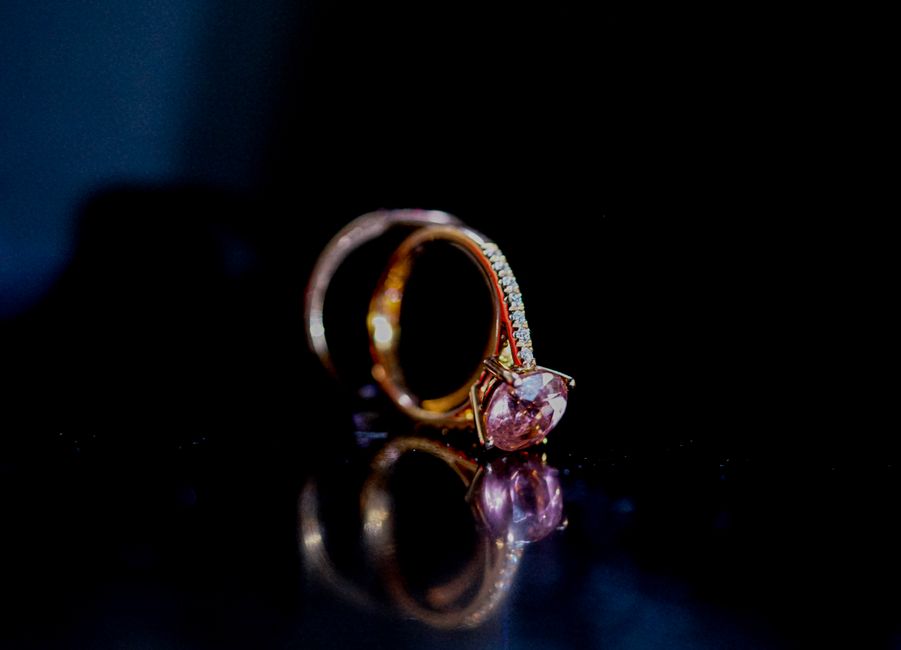
Colored gemstones are also a way to break from tradition without giving up a ring with presence. You can choose one vivid center stone, add small accent stones, or set a colored gem beside a lab-grown diamond or moissanite. Just ask how the stone handles everyday wear. Some gems are more vulnerable to scratches, chips or heat than others, so a jeweler can help you match the stone to your routines and setting.
Make the Meaning Personal
Storytelling doesn’t require a grand symbolic explanation. It can be as simple as choosing a color you love or using a stone from a piece of jewelry you already own. If you’re considering a family stone, have it inspected before designing the new ring. A jeweler can check its condition and help determine whether it can be safely reset.
For secondhand or heirloom stones, ask what is known about their history—and be comfortable with an incomplete story. A ring can be meaningful without having a perfectly documented past.
Modern Settings and Silhouettes: Sparkle Without the Snags
The setting changes the whole personality of a ring. A traditional round solitaire isn’t the only shape that looks polished, and a more modern silhouette can make a familiar stone feel entirely yours. Consider an oval or emerald-cut center, a geometric bezel, a low-profile setting, an east-west orientation, or a ring with asymmetrical side stones.
Bezel settings—where metal wraps around the edge of a stone—can offer a clean, contemporary outline and protect more of the stone’s perimeter. Low settings can be practical if you work with your hands or find raised prongs catch on clothing. On the other hand, a high setting may make a stone feel more dramatic and visible. There’s no universally “best” design; there’s the one that suits your hand, habits and taste.
Here’s my very unglamorous test: try the ring on and slide your fingers together. How does the band feel between them? Does the setting bump the neighboring finger? Run a knit sleeve gently over it. I keep a running mental list of settings that snag on knits, because a ring that looks gorgeous but catches on every cardigan can become a daily nuisance.
Think About Your Wedding Band Early
Some engagement rings sit neatly beside a straight band; others leave a gap or need a curved companion. Neither is a problem if you choose it on purpose. Try the engagement ring with a few band shapes, or ask the designer to consider the pairing from the start. You can also decide that a little negative space is part of the look.
Comfort matters here, too. A wide engagement ring paired with a wide wedding band can feel very different from either ring worn alone. If you’re shopping in person, wear the set for a few minutes and bend your fingers. If you’re ordering online, check the return, resizing and exchange terms before committing.
Recycled Gold and Other Metal Choices
Recycled gold is gold that has been recovered from existing materials and refined for reuse. It can be a way to reduce demand for newly mined gold, but it’s worth asking what the seller means by the term and what information they can share. Recycled content may come from manufacturing waste, old jewelry or other sources; don’t assume every company uses the same process or can trace every gram to a specific item.
Choose the color and alloy based on both style and wear. Yellow gold has a warm look; white gold offers a cooler tone and may require periodic replating depending on its finish and alloy; rose gold brings a pink hue. Ask about metal composition if you have sensitivities, and ask how the finish will age. For daily wear, the construction and thickness of the band matter as much as the metal choice.
Bespoke Design: More Control, More Questions
A bespoke ring gives you a chance to shape the details: stone, setting height, band width, texture and small personal touches. It’s especially useful if you have a nontraditional stone, an heirloom you want to reset or a hand shape that doesn’t feel served by standard designs. It can also help you avoid paying for details you don’t want.
Start with a short brief rather than a perfectly formed design. Bring pictures of rings you like, note what you dislike, and explain how you use your hands. Pinterest boards for ring inspiration are handy for spotting patterns: perhaps you keep saving bezel settings, tapered bands or unusual side stones. Use the board as a conversation starter, not a promise to copy another maker’s work exactly.
Then ask the designer to walk you through material choices and practical trade-offs. Request a sketch or model, confirm the final dimensions, and get the cost, timeline, resizing terms and maintenance plan in writing. Bespoke work can be a wonderful collaboration, but clear expectations keep the romance from turning into a frustrating email thread.
If you’re browsing for ideas, Bespoke Bride can be a useful source of wedding inspiration, while a retailer such as Lily Arkwright may help you explore contemporary ring https://www.bespoke-bride.com/2025/10/09/how-to-choose-an-engagement-ring-thats-as-unique-as-your-love-story/ styles and stone options. Modern Gents is another name shoppers may encounter when comparing more accessible ring choices. Treat every brand as a starting point for questions: check the specific product details, materials, warranties and sourcing information rather than assuming the company name alone tells you what a ring is made of.
How to Compare Your Options
Option What you may love What to ask about Lab-grown diamond Diamond character and familiar brilliance Producer, production information, grading and metal sourcing Moissanite Distinctive, lively sparkle and design flexibility Stone maker, appearance in different light and care needs Colored gemstone Personal color and room for storytelling Durability, treatment disclosure, origin information and setting protection Vintage or heirloom ring Existing materials, character and a history of its own Condition, repairs, resizing limits and any known provenanceA Practical, No-Guilt Shopping Plan
- Name your priorities. Write down your must-haves, nice-to-haves and deal-breakers. Include appearance, sourcing, comfort and a budget range.
- Compare stone types in person if possible. Look at a lab-grown diamond, moissanite and colored gemstones in more than one lighting condition.
- Choose the setting for real life. Consider how high it sits, whether it snags and how it feels next to your other fingers and future band.
- Ask direct sourcing questions. Request plain-language answers about the stone, recycled gold, manufacturing and aftercare.
- Read the fine print. Confirm sizing, returns, warranties, repairs and what happens if a stone becomes loose.
And yes, talk about money. A budget doesn’t make an engagement less romantic; it gives you a shared boundary and helps you choose with confidence. You can also borrow a planning habit from wedding logistics: if you’re already using a Google Sheet for RSVPs—perhaps through an invitations promo—make a separate tab for ring options, quotes, sourcing answers and follow-up questions. It’s a tidy way to compare facts without relying on memory or sales pressure.
The Best Ring Is the One You Can Feel Good Wearing
An ethical ring doesn’t have to be plain, and a sparkly ring doesn’t have to follow a tradition that never felt like yours. A lab-grown diamond, moissanite, colored gemstone, vintage stone or custom design can all be beautiful choices. Pair your stone with recycled gold if that aligns with your priorities, and keep asking for details until the answers make sense to you.
Most of all, try the ring on. Look at it from the side, check how it moves on your hand and notice how the band feels between your fingers. The right ring is not just photogenic. It fits your values, your budget, your style and the life you’re going to wear it through.